Sintra

No posts found in this category.
Magical Garden Aladdin Sintra

MAGICAL GARDEN ALADDIN SINTRA

Magical Garden Aladdin Sintra - An enchanting interactive show at Jardim Novo do Palácio Nacional de Queluz where Aladdin, Princess Jasmine, and the Genie of the Lamp bring a magical world to life through light, technology, and adventure.

Weekday Shows

Wednesday to Thursday

  • Main ticket: 12€
  • Discount ticket: 10€ (Porto residents, children 4-17, students, older people 65+, people with disabilities)
  • Family ticket: 8€ (1-2 adults + 1-3 children 4-17)
  • Children 0-3: Free

Weekend Shows

Friday to Sunday & Holidays

  • Main ticket: 14€
  • Discount ticket: 12€ (Porto residents, children 4-17, students, older people 65+, people with disabilities)
  • Family ticket: 10€ (1-2 adults + 1-3 children 4-17)
  • Children 0-3: Free

Show Times (Wednesday-Sunday)

9:30 PM | 10:00 PM | 10:30 PM

Duration: Approximately 75 minutes

The Magical Experience

Experience the captivating world of Aladdin through luminous sculptures, video mapping, augmented reality, interactive installations, and holograms. This immersive show unfolds along a scenic 1 km route, placing you right in the heart of the action.

Picture yourself soaring through the skies on a magic carpet within a tunnel of light, engaging in a spellbinding treasure hunt, and marveling at a magnificent water fan display. Magical Garden Aladdin Sintra rejuvenates the Jardim Novo do Palácio Nacional de Queluz, providing a unique perspective to the space.

Starring

  • Igor Lima as Aladdin
  • Jasmin Andreia Brasil as Princess Jasmine
  • Quimbé as the Genie of the Lamp

A collaboration between OCUBO and Parques de Sintra, this dreamlike universe inspired by 'One Thousand and One Nights' makes you an integral part of Aladdin's magical journey.
Park and Palace of Montserrat
T Park and Palace of Montserrat
+351 219 237 300
NA
NA

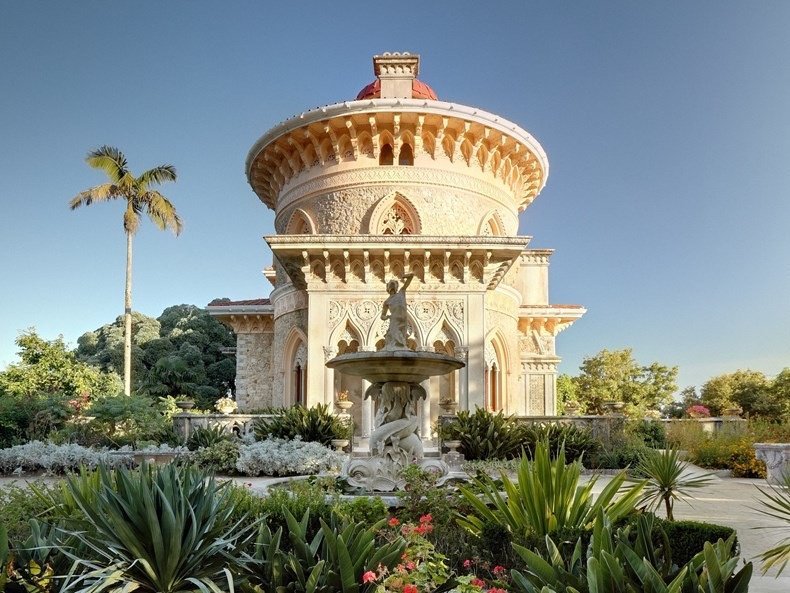
Park and Palace of Montserrat is an oriental fairytale located on the hills of Sintra. This place is not so popular among tourists but not less beautiful.

The history of this castle started in the 16th century when the monk Gaspar Preto received permission to build a chapel on the lands belonging to a religious order. Further, in 1601, the Melo e Castro family was renting this land and building on it. And in 1718 they bought it completely.


Don Caetano de Melo e Castro was the Deputy Prime Minister of India and spent almost all the time with his family in Goa. The estate was empty all the time and the earthquake of 1755 also severely destroyed it. He had no time to restore it, and he rented it to a wealthy English merchant Gerard de Visme. He built a small Neo-Gothic palace, but soon returned to England and the estate changed hands again.

It is being subleased to British Member of Parliament William Beckford. He was a well-known art historian and collector, as well as the author of the novel “Vathek”. Beckford continued building the castle. He made a waterfall in the park and planted trees. Young Byron was an admirer of Beckford’s work and spent several months on the estate. After that, he called Park and Palace of Montserrat a truly heavenly place.


Further, Francis Cook, after several years of rent, buys the estate from the Melo e Castro family. After the purchase, the new owner began building the palace and reorganizing the garden. This is what we can now see in the estate of Monserrate. The architect James Thomas Knowles built it. The castle intertwined Italian Gothic with oriental motifs and Portuguese ornaments. 500 people worked in the construction at the same time.

Nearby, he bought 13 more estates to invite friends over. It was a house-museum full of luxury items. The stunning garden surrounded the house on all sides. All year round, something is blooming here. There is a Mexican cactus garden, as well as Australian, Chinese and Japanese. In the territory, you can enjoy the views on waterfalls and a pond with golden carps.

The estate has been owned by the Cook family for three generations. In 1929, in connection with the collapse of the New York Stock Exchange, Cook began to sell his property. So in 1946, antique dealer Saraga Saul bought Monserrate. Within a few years, he sold off all of Cook’s antiques. There is nothing left of the former luxury and wealth. In 1949, the government bought the estate and made a reconstruction there. And in 1995, it became a World Heritage Site.


The Park and Palace of Montserrat is located on a steep slope, so there will be difficulties for the elderly and parents with strollers. Since the major attractions of Sintra are far from here, there are no crowds of tourists here. Therefore, you will not have problems with parking.


Working hours:

  • Nov 1 to March, 27  [10:00 - 18:00]
  • March 28 to Oct, 30 [9:30 - 19:00]

Tickets: 

  • regular ticket - 8€
  • under 18 or over 65+ years - 6,5€
  • children under 5 years - free

How to get there:

  • By bus № 435   

Queluz National Palace
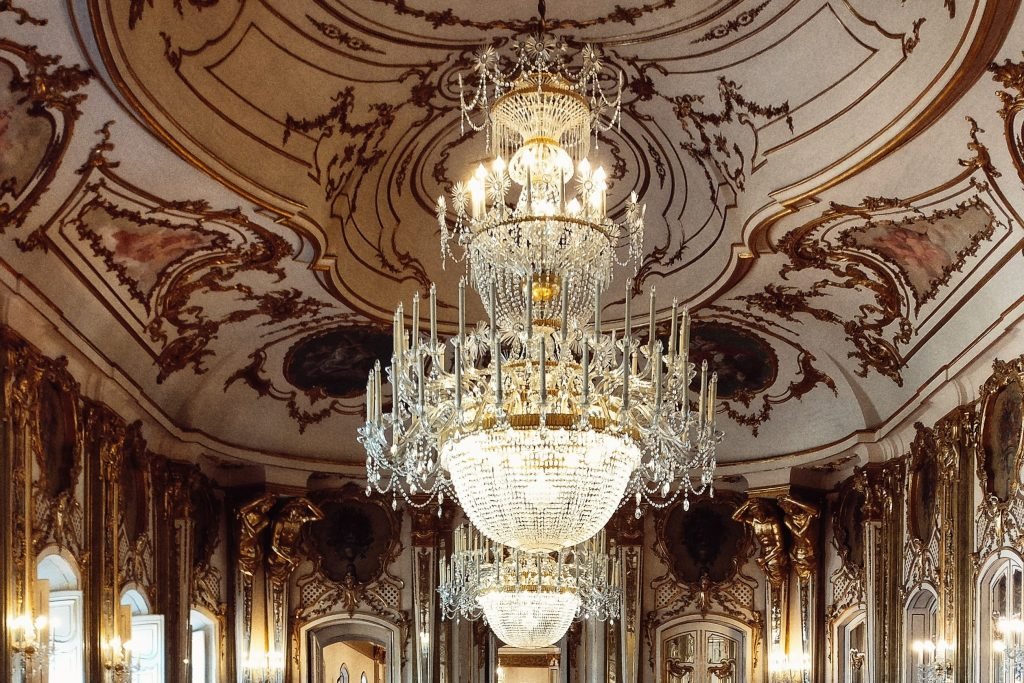
Queluz National Palace is thought to be located in Lisbon by mistake, but this is not so. The site of this castle is in the town of the same name, Queluz, in the municipality of Sintra. From Lisbon, it takes 25-30 minutes to get there. The construction of the palace began in 1747. King Joao V wanted to build himself a country house. Two architects, Mateus Vicente de Oliveira and Jean-Baptiste Robillon, worked in the building. Here mixed architectural styles such as Rococo, Baroque and Neoclassicism.
In 1794, the monarchs moved to the castle of Queluz due to the fire in the Ajuda Palace. It became the official residence of the royal family until 1807. At that time, the royal family fled to Brazil, due to Napoleon’s invasion. In 1908, the palace became the property of the state and since 2001 it has been open to the public.
Queluz National Palace and its Gardens are called the “Portuguese Versailles”. And this is not in vain, as its interior decoration is simply amazing. There is a beautiful park around with a lot of figuratively trimmed flower beds, statues and fountains. During the flowering of oranges, there is a marvelous aroma. You can also see the river channel made with azulejo tiles, along which the royal family and guests of the castle used to ride boats. An interesting fact is that heads of foreign states, who come to visit Portugal, still settled here. And in the throne room, concerts of classical music and various kinds of performances are still arranged. Initially, the walls of the palace were pink, but later the Portuguese authorities repainted it in blue. We highly recommend visiting this palace, as it is the pearl of the palaces of Sintra.

Working hours:

  • 10:00 - 18:00 everyday ( box office closes at 17:00)

Tickets palace + park :

  • regular ticket - 10€
  • if you are under 18 or over 65+ years - 8,5€
  • children under 5 years - free

Tickets park only:

  • regular ticket - 5€
  • if you are under 18 or over 65+ years - 3,5€
  • children under 5 years - free

How to get there:

  • By bus №101,106 

 
Sintra National Palace
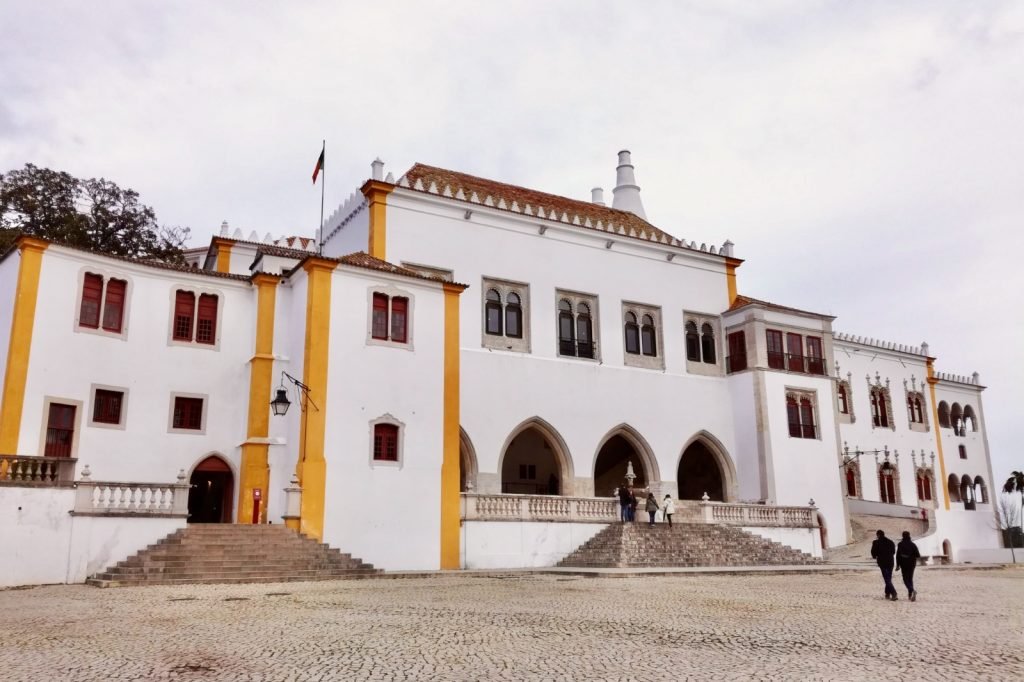
Sintra National Palace is not very popular among tourists, but this is in vain, as it definitely has something to surprise you with. It was built during the reign of the Moors on the Iberian Peninsula. Further, in the XII century, the first king of Portugal, Afonso I, liberated Sintra and the National Palace became his property. The Palace of Sintra was the least susceptible to destruction, since the monarchs of the country permanently lived in it. Each subsequent king made his own edits, improvements, and completed something. Therefore, the palace has a mixture of different architectural styles (Gothic, Manueline, Moorish).
The main stage of construction was during the reign of João I, in the 15th century and King Manuel I. Then such beautiful halls appeared: the Hall of Magpies (Sala das Pegas), the Hall of Swans (Sala dos Cisnes), the Arab Hall (Sala does Arabs) and Armorial Hall (Salão Armorial). King João built the Hall of Magpies after Queen Philippa caught him kissing a lady-in-waiting. Then the ladies-in-waiting overheard them outside the door and spread this gossip throughout the district. Then he ordered to decorate the hall with 136 magpies. This is the exact number of ladies-in-waiting in the castle. The Arabic Hall served as the bedroom of King Joao and the oldest azulejo tiles served as decoration. In the Armorial Hall, on the wooden ceiling, there are 72 coats of arms of the most noble families of Portugal.
We definitely recommend Sintra National Palace for a visit, as it will surprise you with its beauty. Also, you will not need to wait and stand in lines, as there are no crowds of tourists, plus the location is very good near the center of Sintra. And it is easy to walk to it without overcoming steep climbs.
Working hours:
  • Nov, 1 to March, 27   [9:30 - 18:00]
  • March, 28 to Oct, 30 [9:30 - 19:00]

Tickets:
  • Regular ticket - 10€
  • under 18 or over 65+ years - 8,5€
  • Children under 5 years - free

How to get there:
  • By bus № 435, 434
Sintra Tram
T Sintra Tram
NA
NA
NA
NA
Sintra tram is also a kind of mobile museum. The tramway started running in 1904. There are 11 retro cars on the route of 11.5 kilometres. The company Brill built open-and-closed trailers in 1903. Various financial difficulties hindered and interrupted the work of the tram. After the Portuguese Revolution of 1974, the line was closed. And only 6 years later, the rails opened again and were completely restored. Sintra tram wagons are two-axle and run on a meter-wide track. They make 8 stops along the way. The length of the entire route is 13 kilometers. The main idea of these rails was to transport vacationers from the city center to the beaches of the Adriatic. The starting point of the route begins near the railway station of Sintra. And you can drive it to the picturesque Praia das Maçãs beach. Thus, you will pass through the entire Sintra-Cascais National Park, near the wonderful Colares municipality and not far from the Praia Grande. The last place is a wide sandy beach with the one of the largest saltwater swimming pools in Europe. Tourists consider this coast as one of the cleanest in Portugal.
Travel tips:
  • A ride on this retro tram will help you make a great sightseeing tour. Along the way, you will have beautiful views of Sintra.
  • The entire route will take approximately 40 minutes one way.
  • Now the tram operates only in the summer from March to September.
  • There is a very steep descent on the Galamares section of the road, when the tram drops from 200 meters to 70 meters in less than 3 km. And since the wagons are open, we advise you to hold on tightly to the handrails and not move around the wagon.

Tickets:
  • Regular ticket - 3€
  • If you are under 18 or over 65+ years - 2€
  • Children under 5 years - free